
Mostly older systems
Polycrystalline
Once widely used. Generally less efficient than modern monocrystalline panels, so more roof space is needed for the same rated power.
Usually an older-system comparison.Solar panels · Townsville & North Queensland
Five things that shape a better solar system.
Solar isn’t just about choosing a panel and counting how many fit. Your roof, future electricity use and panel technology all affect how your system performs.
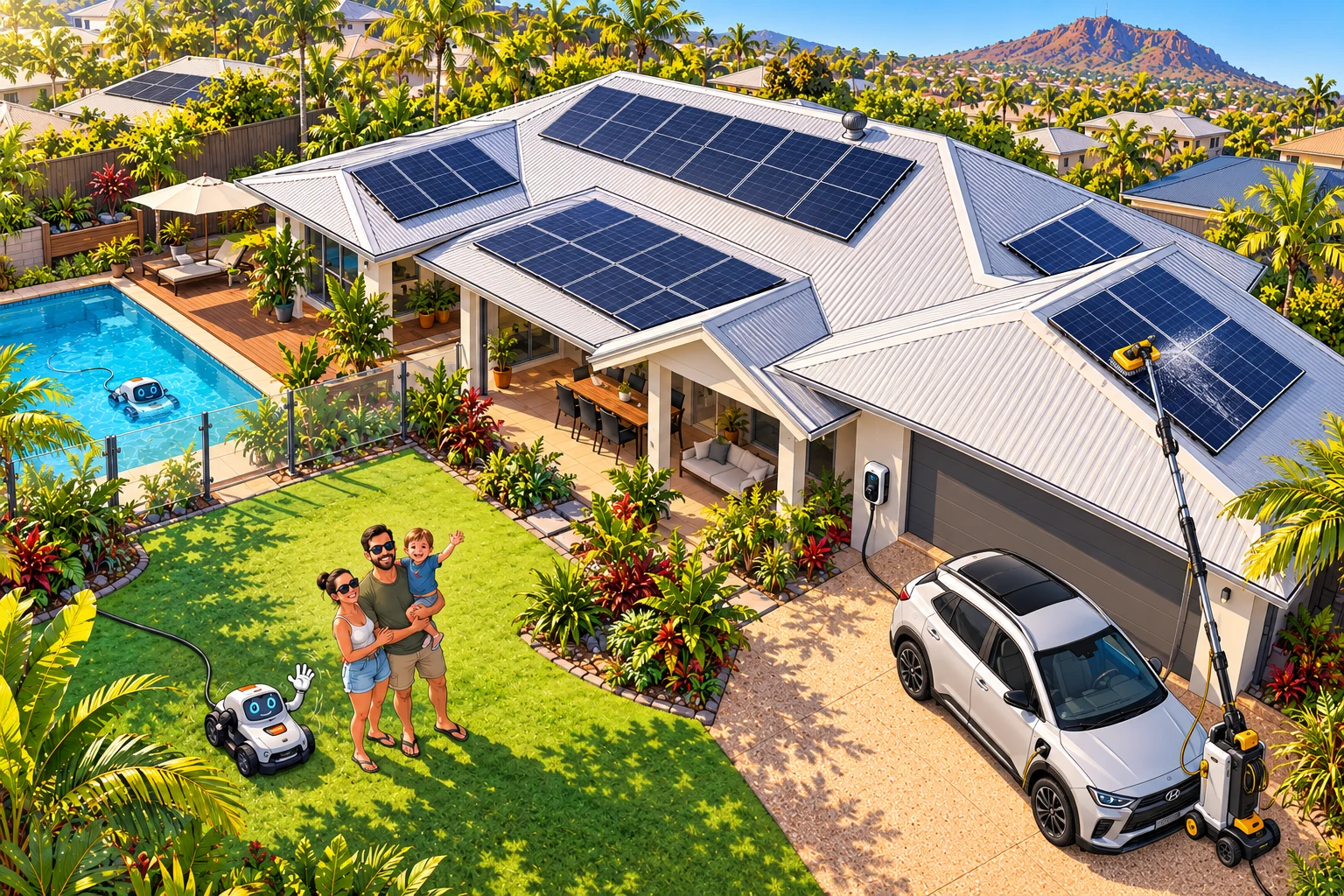
01 / Think ahead
A larger roof can give you more room for solar. The right system size also depends on how much electricity your household uses — and when.
EV charging, electric hot water, air-conditioning and pools can all add to future demand. A battery can help you use more of your daytime solar later.
Where it makes technical and financial sense, we make good use of the largest suitable, unshaded roof area available, while considering network limits, inverter sizing and your budget.
Make room for the way you’ll live tomorrow.
02 / Follow the sun
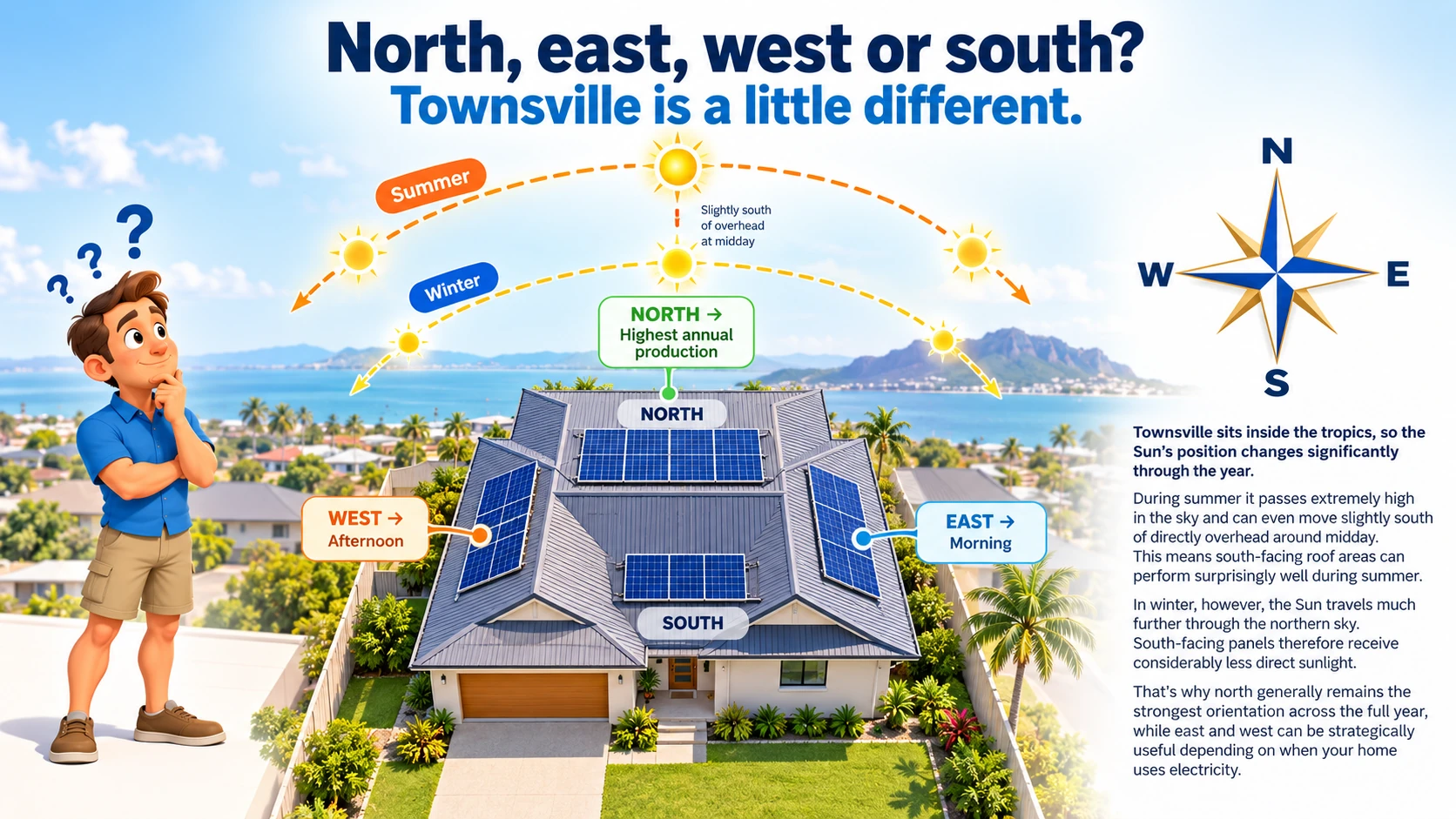
Townsville sits inside the tropics. The Sun passes very high in summer and, around part of the summer, slightly south of directly overhead at solar noon.
SummerSouth-facing roof areas can perform well, especially at a low tilt.
WinterThe midday Sun is lower in the northern sky, so south-facing panels receive much less direct sunlight.
North generally delivers the strongest annual production. East and west can help match generation to when your home uses electricity.
03 / Let the light through
Like looking through dirty glass, anything covering a panel reduces the light reaching its photovoltaic cells.
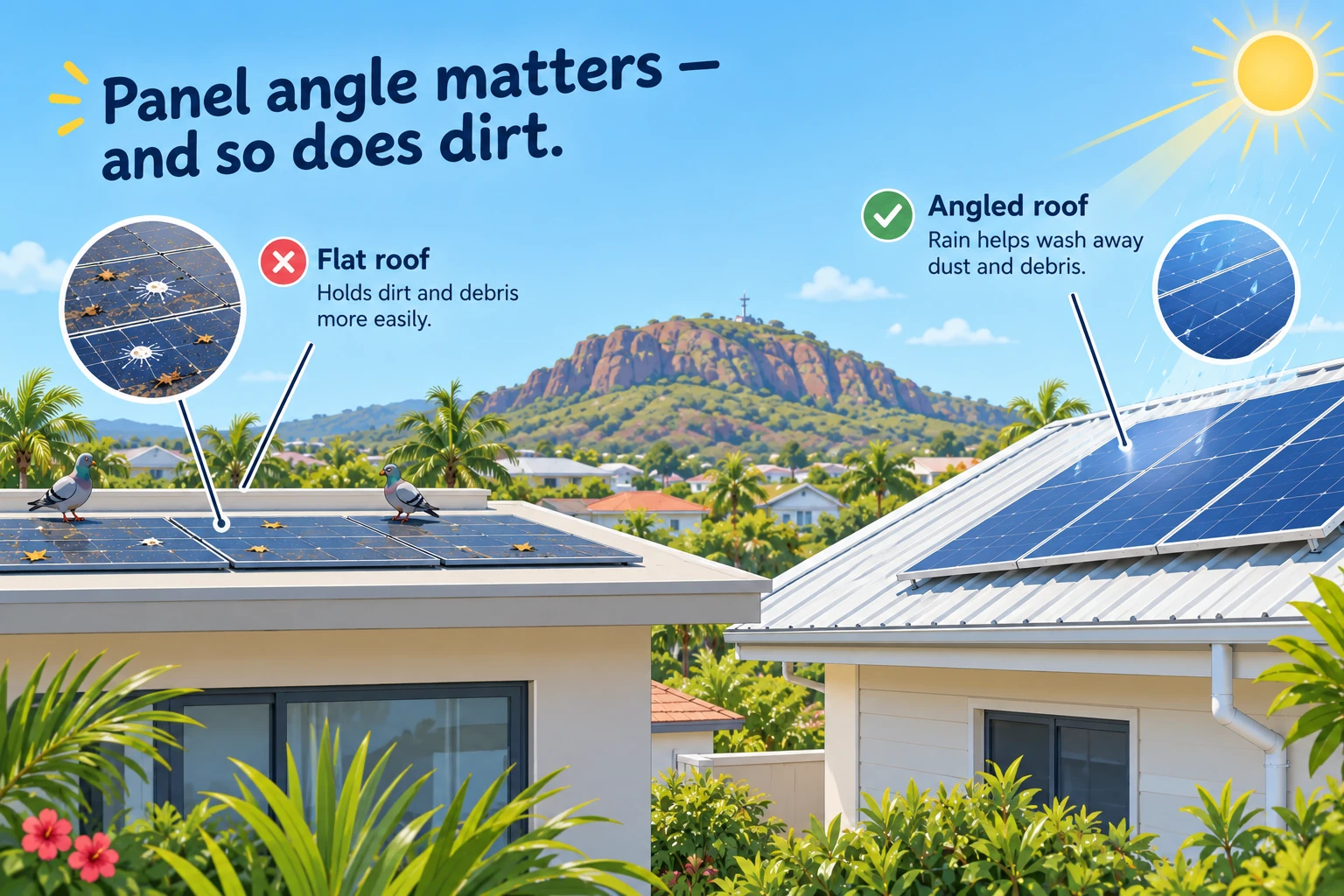
A suitable angle can help rain carry away dust and loose debris. Almost-flat panels tend to retain more dirt. Rain helps, but won’t reliably remove stuck-on bird droppings.
And in Townsville, pigeons can sometimes affect solar production too.
Not so much when they’re flying — more because of what they’ve eaten.
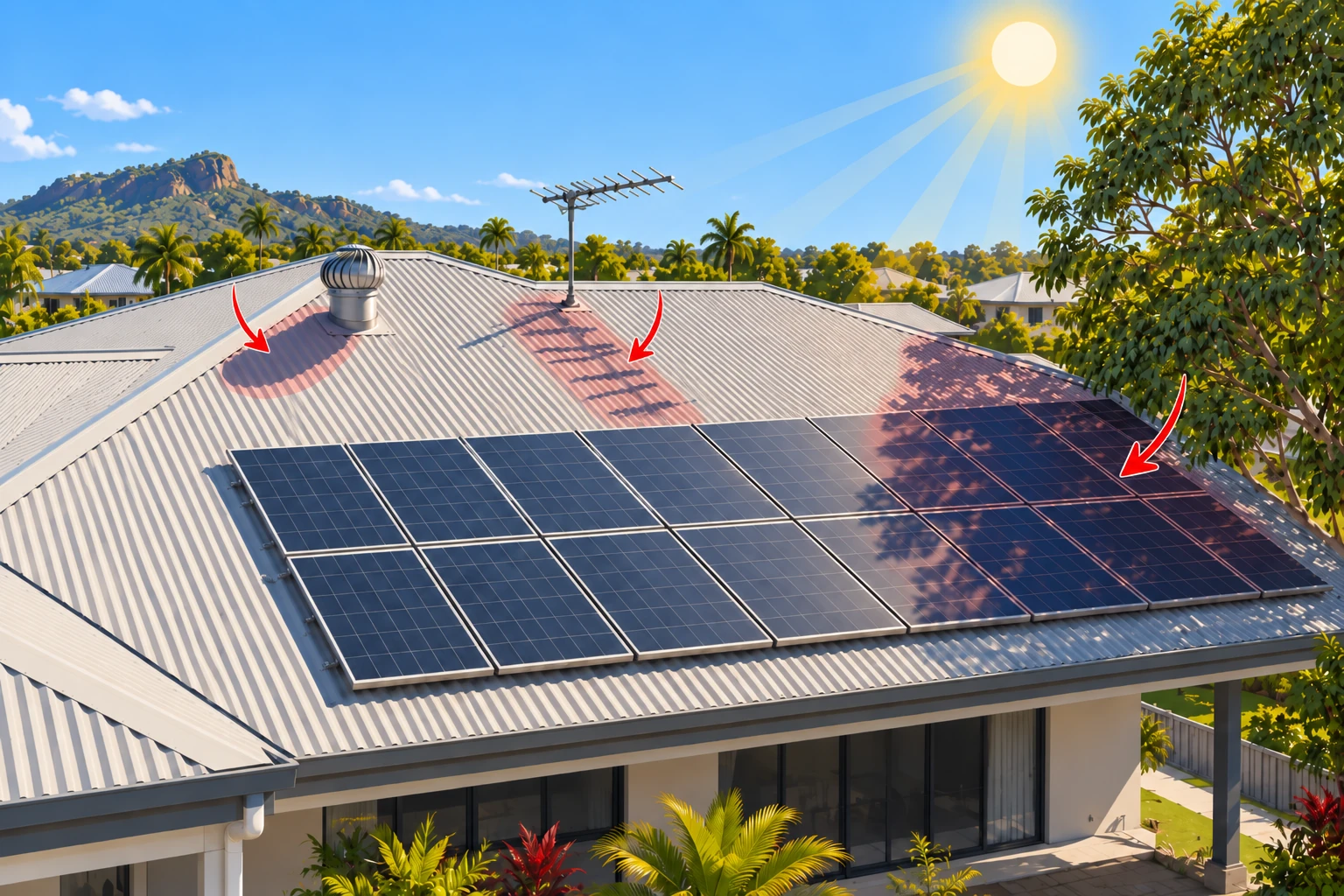
04 / Design around shade
Before deciding where panels go, we look for trees, antennas, vents, roof structures and neighbouring buildings that could affect production.
Shade changes throughout the day and the year. A clear roof at midday may still have morning, afternoon or winter shading.
Where practical, we position panels away from known obstacles and discuss vegetation that could affect long-term generation.
Better placement. Fewer avoidable generation losses.
05 / Choose the right technology
Start with the cell technology, then compare the exact panel. Efficiency tells you how much rated power you can fit into a given roof area — but temperature performance, degradation and support matter too.
Mostly older systems
Once widely used. Generally less efficient than modern monocrystalline panels, so more roof space is needed for the same rated power.
Usually an older-system comparison.Mainstream residential
The standard for modern residential installations. A broad category covering several cell designs, including PERC and TOPCon.
Compare the cell design and model.Advanced mono designs
Moves electrical contacts to the back of the cell, freeing more of the front surface to capture light. LONGi’s HPBC is one example.
An option for making more of roof space.These aren’t three separate material types. Back-contact panels are also monocrystalline. PERC, TOPCon and HPBC describe different cell designs; the model’s actual specifications determine performance.
Why we often recommend LONGi
The Hi-MO X10 family uses HPBC 2.0 back-contact cell technology. It’s an option we consider when making the most of your available roof area.
We compare more than wattage before recommending a panel for your home.
Your quote will identify the exact model, wattage and dimensions, together with its datasheet and applicable warranty terms.
Let’s talk about your roof
We’ll look at your roof, electricity use and future plans before recommending a system.